If You’ve Sent 50 HARO Pitches and Heard Nothing… You’re Not Alone
Here’s the deal: HARO used to be the holy grail of PR outreach. You’d send a quick pitch, land a mention on Forbes, boom — instant backlink. Easy.
But that was then.
These days? You’re competing with thousands of people for the same query. Journalists get flooded. Inboxes overflow. Your perfectly crafted pitch? It gets buried under 400 others before the journalist even has their morning coffee.
And since Connectively (HARO’s rebranded version) rolled out its new platform, a lot of folks have been left scratching their heads wondering: is it even worth it anymore?
Let me be real with you — it’s not dead, but it’s definitely not what it was. The good news? There are better options out there. Some are faster, some are less competitive, and a few of them are completely free.
In this guide, I’m going to walk you through the best HARO alternatives in 2026, what actually works, and how to stop wasting your time pitching into the void.
📖 Complete AI SEO Guide 2026 🔧 Technical SEO Checklist ✍️ AI-Optimized Blog Content
- What Actually Happened to HARO in 2026?
- What Makes a Good HARO Alternative?
- The Best HARO Alternatives in 2026
- What Actually Works in 2026 (Real Talk)
- How to Actually Get Featured: A Step-by-Step System
- Sample Pitch (Human Style)
- Common Mistakes That Are Killing Your Results
- Best HARO Alternatives Compared
- Frequently Asked Questions
- The Bottom Line
1 What Actually Happened to HARO in 2026?
HARO (Help a Reporter Out) was acquired by Cision back in 2014, and for years it chugged along just fine. Then in 2023, it got rebranded as Connectively and the platform got overhauled.
The result? A lot of longtime users were… not thrilled.
Here’s what changed:
- Way more competition — the platform grew massively, meaning each query gets hundreds of responses
- Lower response rates — journalists became more selective (can you blame them?)
- The free tier got significantly limited
- The interface changed, and not everyone loved it
That said, it still works for some people. But if you’re relying on it as your only strategy, you’re leaving a lot on the table.
2 What Makes a Good HARO Alternative?
Before I dive into the tools, let me set some expectations. Here’s what you actually want in a HARO alternative:
- Less competition — fewer people on the platform = better odds for you
- Faster turnaround — ideally, you’re getting matched quicker
- Niche relevance — tools that actually serve your industry
- Direct journalist access — no intermediary black hole
- Reasonable ROI — your time is money
Okay, with that in mind, let’s get into the tools.
3 The Best HARO Alternatives in 2026
Featured (formerly Connectively / HARO)
Yes, HARO itself — now Featured — made the list. Why? Because despite the changes, it still has the largest journalist network of any platform on this list.
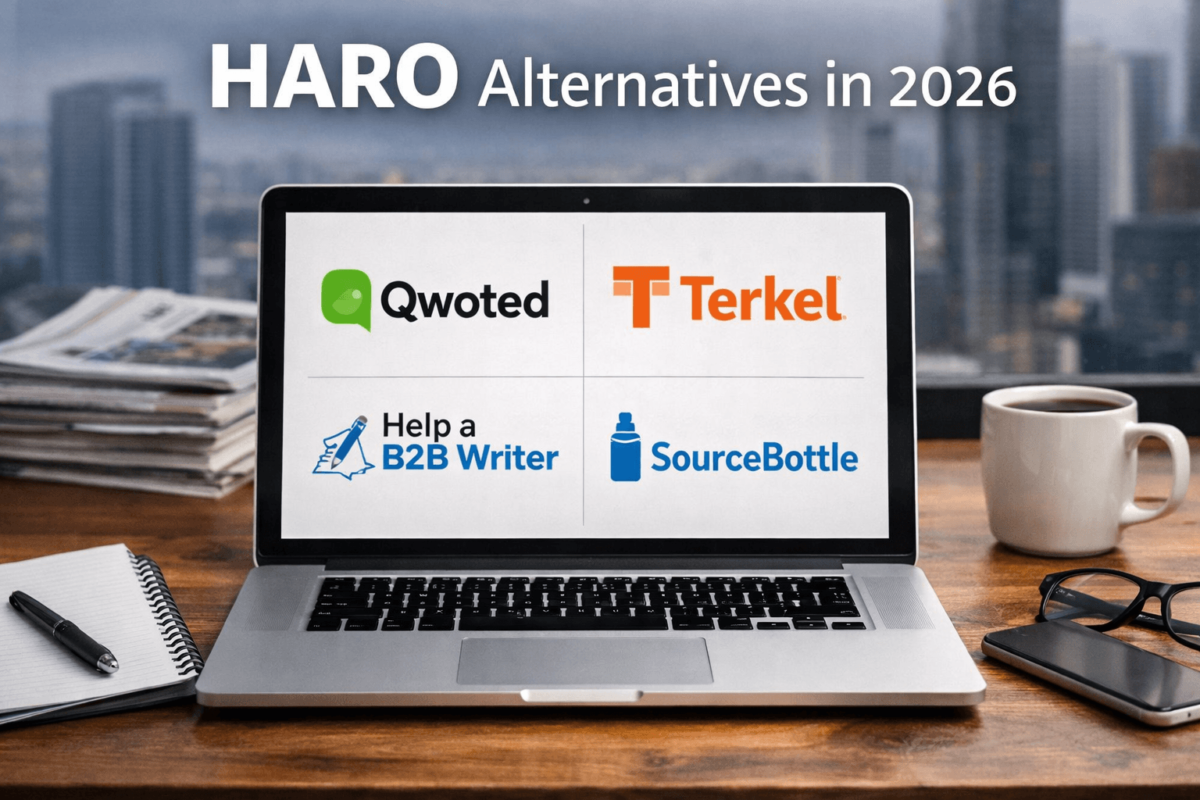
Qwoted
Qwoted is probably the best direct alternative to HARO right now, and honestly, it’s where I’d send most people first.
Terkel
Terkel flips the script a little — instead of pitching to journalists, you’re answering questions that get turned into published content.
Help a B2B Writer
This one’s a hidden gem. It’s niche, it’s focused, and the competition is surprisingly low.
SourceBottle
SourceBottle has been around for a while, and it’s particularly popular in Australia and the UK — though it works for US-based sources too.
Twitter/X — The Underrated Journalist Goldmine
This is where most people sleep. Journalists have been using Twitter/X to find sources for years, and the conversations are happening in real-time.
LinkedIn Outreach — The Long Game That Pays Off
LinkedIn isn’t a source request platform — it’s a relationship platform. And that’s exactly why it works.
Here’s the move: find journalists who cover your industry, follow them, engage with their content genuinely, and then — once you’ve established a presence — reach out with a quick, value-forward pitch.
Reddit — The Wildcard That Actually Works
This is where most people give me a weird look. Reddit? For backlinks?
Hear me out. There are subreddits like r/Journalists, r/HireAWriter, r/findareddit, and niche communities where journalists and content creators post source requests all the time. Plus, being a genuinely helpful Redditor in your niche builds authority over time.
Direct Journalist Pitching — Old School, Still Gold
Sometimes the best strategy is the most obvious one: just email the journalist directly.
Find journalists who cover your niche using Google, Twitter, or tools like Muck Rack. Read their recent articles. Then send a short, specific pitch that actually adds value to their beat.
4 What Actually Works in 2026 (Real Talk)
Let me bust a few myths before you go sign up for every platform on this list.
Tools don’t get you backlinks. Your pitch does. The platform is just the room you’re standing in.
Wrong. Spreading yourself thin across 8 platforms and sending mediocre pitches everywhere will get you nowhere. Pick 1–2, and go deep.
Nope. Relevance beats volume every time. One killer pitch to a perfectly matched query beats 20 generic responses to random journalists.
Here’s what separates people who actually get featured from everyone else:
- They pitch fast — most queries have a 24–48 hour window
- Their answers are specific, not vague thought leadership fluff
- They write like a human, not a press release
- They follow up (without being annoying)
- They’re consistent — not a one-and-done sprinter
5 How to Actually Get Featured: A Step-by-Step System
Okay, let’s get practical. Here’s the system that works:
- Pick 1–2 platforms only. Seriously. Don’t spread yourself thin. Start with Qwoted + X (or HARO + Help a B2B Writer if you’re in that space).
- Set up alerts and systems. Most platforms have email digests or push notifications. Use them. Speed matters.
- Write better pitches. Keep them short, specific, and human. No walls of text. No corporate speak.
- Follow up once. If you don’t hear back in 3–4 days, one polite follow-up is totally fine.
- Track and iterate. Keep a spreadsheet. What pitches got responses? What angles worked? Double down on what works.
6 Sample Pitch (Human Style)
Here’s what a good pitch actually looks like. Not polished. Not corporate. Just real.
Hey [Name],
Saw your query on remote work burnout — I’ve got a relevant angle for you.
I run a 40-person remote team and we tracked productivity data across 18 months. What we found: burnout peaks at month 3, not month 12 — which surprised us. Happy to share specific data or give you a quick quote.
Available for a 15-minute call this week if that’s easier.
— [Your Name], [Title], [Company]
7 Common Mistakes That Are Killing Your Results
If your pitch looks like a college essay… it’s getting ignored. Here are the mistakes I see over and over:
“I’m an expert in digital marketing” tells a journalist nothing. What specific insight do you have for their specific query?
Most platforms have tight windows. If you’re responding 36 hours later, the journalist has already filed their story.
Nobody’s reading your 800-word pitch. Keep it under 150 words. Give them the quote, then offer more.
Pitching a food journalist about your SaaS tool is a waste of everyone’s time.
Most people give up after 10–15 pitches. The people getting featured consistently have sent 100+.
8 Best HARO Alternatives Compared
Here’s a quick breakdown to help you pick the right tool for your situation:
| Category | Best Tool | Best For | Competition Level |
|---|---|---|---|
| Best free option | SourceBottle / X (Twitter) | Bloggers, freelancers | Low–Medium |
| Best paid option | Qwoted or Featured | Agencies, SEOs | Medium |
| Best for beginners | Help a B2B Writer | New content marketers | Low |
| Best for agencies | Qwoted | PR/marketing agencies | Medium |
| Best underrated pick | Reddit + LinkedIn | Everyone | Low |
9 Frequently Asked Questions
Is HARO still worth using in 2026?
It depends. If you’re in a broad niche and willing to send a high volume of pitches, yes — it still works. But if you want faster results with less competition, the alternatives above will serve you better.
Which HARO alternative is completely free?
Several: SourceBottle, Help a B2B Writer, Terkel (for sources), and Twitter/X are all free to use. You can build a solid PR strategy without spending a dime.
How long does it take to get a backlink through these platforms?
Honest answer: it varies wildly. Some people land a mention within a week; others take 2–3 months of consistent pitching. The key is volume, consistency, and quality pitches.
Do I need to be on multiple platforms at once?
No — and I’d actually advise against it if you’re just starting out. Pick one or two, get good at them, then expand. Spreading thin kills your pitch quality.
What’s the best strategy for beginners?
Start with Help a B2B Writer or SourceBottle (if you’re in B2B or lifestyle). Low competition, free to use, and you’ll learn what kinds of pitches actually land before scaling up.
10 The Bottom Line
You don’t need 10 platforms. You don’t need a fancy PR stack. You need one solid system — and consistency.
The people getting backlinks and press mentions in 2026 aren’t using magic tools. They’re just more consistent, more specific, and more human than everyone else.
Now go pitch something.
Related Reading
Complete AI SEO Guide 2026
Technical SEO Checklist 2026
Local SEO Strategies
Schema Markup for AI Search
AI-Optimized Blog Content
Want More Backlinks & PR Mentions?
Explore our SEO guides, tools, and strategies to build authority that compounds over time.
Browse All Resources →