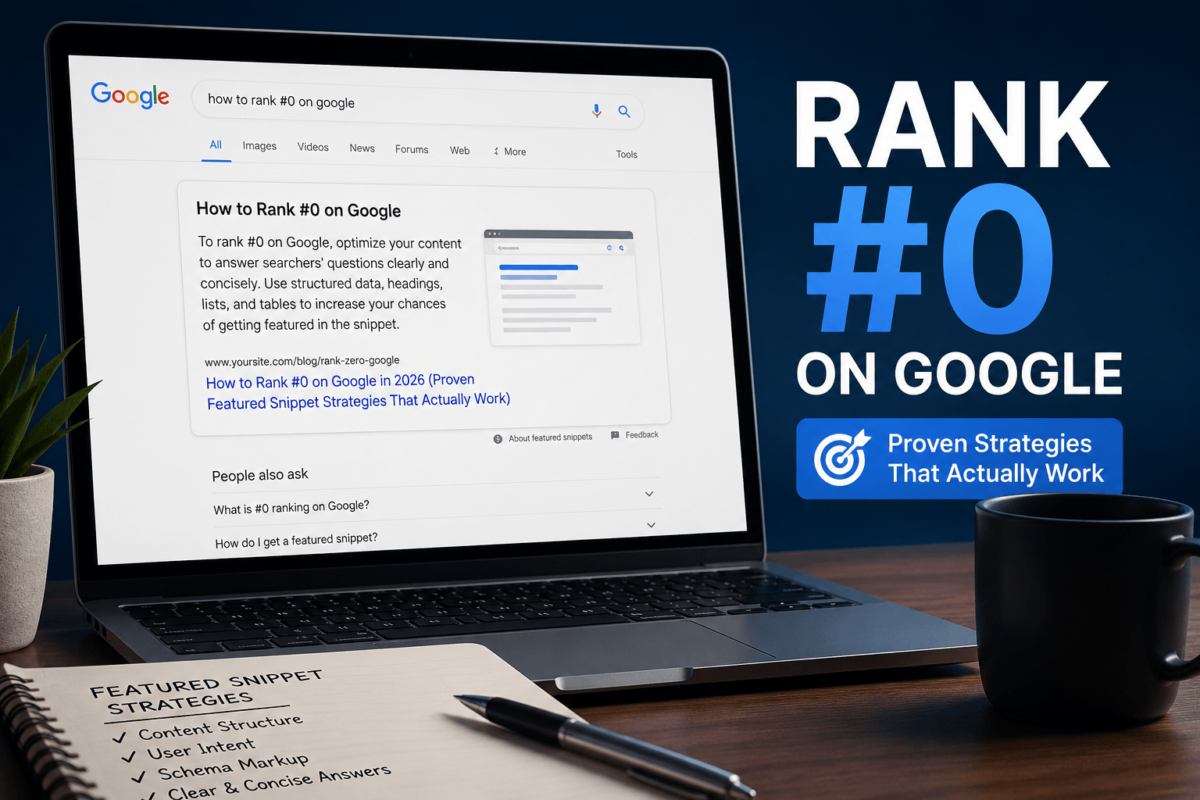
How to Rank #0 on Google in 2026 Proven Featured Snippet Strategies That Actually Work
What Are Featured Snippets in 2026 🔍
Back in 2015, featured snippets were mostly about definitions. Today? They’re the backbone of AI-powered search. All three of the dominant AI platforms pull structured content from snippet-optimized pages:
In 2026, winning a featured snippet doesn’t just mean ranking #0 on Google. It means being cited by AI tools that millions of people use daily. That’s a multiplier effect most SEOs are still sleeping on.
Why Featured Snippets Still Matter (Even with AI Overviews)
Here’s the thing—a lot of people assumed AI Overviews would kill featured snippets. They didn’t. If anything, they made snippet optimization more important.
Why? Because AI tools need source material. Google’s SGE, ChatGPT’s browsing mode, and Perplexity are all pulling from web pages that answer questions cleanly and authoritatively. Your snippet-ready content is exactly what they’re looking for.
Beyond AI, consider this:
Types of Featured Snippets (And When to Target Each)
1. Paragraph Snippets
These are 40–60 word answers pulled directly from your page. Bold question as a heading, then a clean 2–3 sentence answer. No fluff. No preamble.
2. List Snippets
Google loves pulling numbered or bulleted lists. Each item should be short and action-oriented: step-by-step instructions, ranked options, or quick tips.
3. Table Snippets
Use actual HTML tables. Label columns clearly. Google pulls these for comparison queries like “X vs Y” or “best [product] for [use case].”
4. Video Snippets
Mostly YouTube. Optimize your video title, description, and timestamps around the target question. Less relevant for text-based content.
How to Rank in Featured Snippets (Step-by-Step Blueprint)
Find Real Snippet Opportunities
Not every keyword has a featured snippet. Start by targeting question-based, long-tail queries—especially ones that already trigger a snippet in Google.
Analyze the Current Snippet
Study exactly what Google is already pulling. Ask yourself:
Your job is to write a better, cleaner, more complete answer in the same format.
Match the Search Intent Precisely
Google displays snippets that match what searchers actually want:
Learn more about matching keyword intent (informational, navigational, transactional) for better snippet targeting.
Structure Your Content with “Snippet Blocks”
Here’s what most people miss. You don’t rewrite your whole article. You add a focused snippet block—a short, self-contained section designed to be extracted.
The formula:
For a full technical checklist of every element to optimize—meta, schema, heading structure, and more—read our dedicated featured snippets optimization guide.
Optimize for AI Readability
Think of your content as AI-fodder. ChatGPT, Perplexity, and Google’s SGE all prefer:
Write like you’re answering a quiz—direct, precise, trustworthy. See our dedicated guide on AI snippet optimization and our broader AI content optimization framework for a deeper dive.
Real-Life Examples: Before vs. Optimized ✅
Example Query: “What is a featured snippet?”
“Featured snippets are a really interesting part of SEO that many marketers have been talking about for years now. They appear in search results and can help your visibility…”
What is a featured snippet?
A featured snippet is a highlighted answer box that Google displays at the top of search results—above all organic links. It pulls a short, direct answer from a webpage to answer a user’s query without requiring a click.
See the difference? The second version answers the question immediately, uses the query as a heading, and is under 50 words. That’s snippet-ready.
Affiliate Site Example
Say you run a niche site about coffee makers. You write an article targeting “best drip coffee maker under $100.”
Instead of starting with a 300-word intro about coffee history, you open with a snippet block:
This structure gets you the snippet, builds trust fast, and funnels readers toward your monetized content.
Strategy Comparison: What Actually Works in 2026 📊
| Strategy | Snippets | AI Search | Difficulty | ROI |
|---|---|---|---|---|
| Snippet block formatting | ✅ Yes | ✅ Yes | Low | Very High |
| Direct answer under H2/H3 | ✅ Yes | ✅ Yes | Low | High |
| Structured lists & tables | ✅ Yes | ✅ Yes | Low–Med | High |
| Long-form content only | 🏁 Rarely | 🏁 Partially | High | Medium |
| Keyword stuffing | ❌ No | ❌ No | Low | None |
| Schema markup | 🏁 Partially | ✅ Yes | Medium | High |
How to Use Featured Snippets for Affiliate Traffic 💰
Here’s something most affiliate guides skip entirely: snippets are one of the best top-of-funnel tools for monetized sites.
The strategy is called the informational-to-transactional bridge:
Target Informational Queries
Go after questions like “what is the best X for Y” or “how to choose a [product].” These have high snippet potential and pull in readers early in the buying journey.
Win the Snippet with a Clean Answer
Use a short list or paragraph snippet block at the top of your post. Get that #0 position and the traffic that comes with it.
Bridge to Transactional Content
Once they’re on your page, guide them toward your monetized content:
Product roundup snippets are especially powerful. A query like “best protein powder for beginners” can pull a snippet that shows your top 3 picks—and every single one can link to an affiliate review.
Why You’re NOT Getting Featured Snippets (And How to Fix It)
You’re Not Actually Answering the Question
Most pages dance around the question for 200 words before getting to the point. Google needs a direct answer within the first 1–2 paragraphs of a section.
Your Format Doesn’t Match the Query Intent
Your Answer Is Too Long
Snippets are 40–60 words for paragraphs, 6–8 items for lists. Anything longer gets trimmed—or skipped entirely.
Weak Authority Signals
Google doesn’t pull snippets from pages it doesn’t trust. If your site is brand new or lacks backlinks in your niche, snippet ranking is harder.
Ignoring “People Also Ask”
PAA questions are Google handing you snippet opportunities on a plate. Most people scroll past them.
FAQs About Featured Snippets ❓
Final Thoughts 🎯
Featured snippets in 2026 aren’t just an SEO tactic—they’re your ticket into the AI search ecosystem. Every structured answer you write is a chance to be quoted by Google, cited by ChatGPT, and featured by Perplexity.
Here’s what works time and again. Stop overthinking it and follow this sequence:
Most people never do this. That’s exactly why there are so many weak snippets still sitting unchallenged in the SERPs—just waiting for someone willing to do the work.
That someone should be you.
Ready to start ranking at #0?