SEO Tools · 2026 Guide
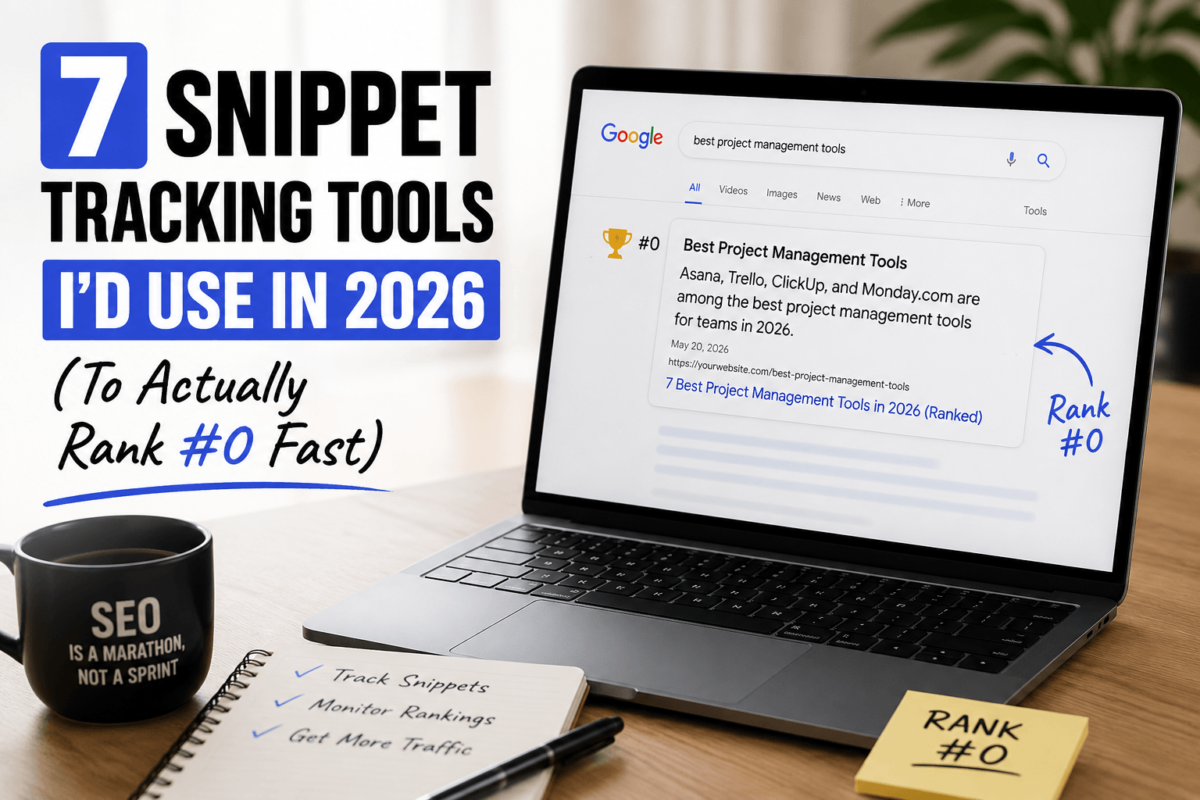
7 Snippet Tracking Tools I’d Use in 2026
(To Actually Rank #0 Fast)
The definitive guide to winning featured snippets — tools, workflows, and proven strategies to claim position zero on Google.
📅 Updated May 2026|✍️ Jaykishan Panchal|⏱ 12 min read
Snippet tracking tools help you monitor whether your content is winning, losing, or getting close to Google’s featured snippet — that highlighted box at the very top of search results, also called position zero. In 2026, with AI search (SGE, Perplexity, ChatGPT) pulling answers directly from top-ranking content, owning that position zero has never been more valuable. The right tool shows you exactly which queries you’re close to winning, which competitors are beating you, and what to fix.
📋 Quick Summary
Best Overall
Semrush — for agencies and SaaS sites
Best for Small Blogs
SERPWatcher or Wincher — simple, affordable, effective
Biggest Mistake
Tracking rankings but ignoring snippet format and structure
Fastest Win
Find queries where you rank #2–#5 with a snippet-friendly answer
Key Insight
Snippet tracking directly improves CTR, not just rankings
Free Option
Google Search Console — start here before paying anything
2026 Shift
Tools that track AI-generated snippet visibility are now a must-have
I
What Are Snippet Tracking Tools (And Why They Matter in 2026)
Think of snippet tracking tools as a radar for position zero. While standard rank trackers tell you where you are in the search results, snippet trackers tell you whether you’re showing up in that prime real estate — the featured snippet box that sits above everything else on the page.
Here’s the truth: ranking #1 organically is great. But if someone else owns the featured snippet for your target query, they’re getting the click. Studies consistently show featured snippets pull 20–30% of all clicks for a keyword — sometimes more.
In 2026, this matters even more. Google’s Search Generative Experience (SGE) and AI tools like Perplexity and ChatGPT pull heavily from content that already ranks in featured snippets. Win the snippet, and there’s a real chance you’re also feeding the AI answer engines — which is the future of search visibility.
II
Why Most People Fail at Featured Snippets
Most people don’t realize this: you might already be ranking on page one and still be nowhere near a featured snippet. Why? Because ranking and snippet-winning require slightly different strategies.
Here are the most common mistakes I see:
- Tracking keyword rankings but not monitoring snippet SERP features
- Ignoring the format — snippets favor tables, numbered lists, or short 40–60 word definitions
- Not analyzing query intent — a “how to” query needs steps, not a wall of text
- Never testing content changes to see if snippet position responds
- Overlooking competitors who’ve recently stolen a snippet you used to own
The fix? Use a tool that separates snippet data from regular ranking data. That’s the whole game.
III
Best Snippet Tracking Tools (With Real Use Cases)
1
Best For
Semrush — Agencies & SaaS Sites
$129+/mo
Semrush is the Swiss Army knife of SEO, and its Position Tracking module does an excellent job flagging SERP features — including featured snippets, People Also Ask boxes, and local packs. You can filter by snippet type and see exactly which keywords you’re triggering or missing.
💼 Real-Life Example
A SaaS company tracking 300 keywords can filter for queries where a competitor holds the snippet but they rank #2 or #3 — those are the immediate opportunities.
⚠ Downside: Starting at $129/month, it’s overkill for a small blog.
2
Best For
Ahrefs — Content Teams
$99+/mo
Ahrefs’ Rank Tracker shows which of your pages trigger featured snippets and lets you filter by SERP feature. It also shows the snippet type — definition, list, table, video — which is critical for knowing how to reformat your content.
💼 Real-Life Use
Running a mid-size content operation with 5–10 writers? Use Ahrefs. The “SERP features” column in the keyword explorer alone is worth the price.
⚠ Downside: No dedicated snippet change alert system — you have to check manually.
3
Best For
AccuRanker — Affiliate Blogs
$116+/mo
AccuRanker updates rankings daily (faster than most tools) and highlights SERP features including featured snippets. For affiliate bloggers who need to react quickly to ranking changes, the speed advantage is real.
💼 Real-Life Use
Running a small affiliate blog making $2,000–$5,000/month? AccuRanker is purpose-built for tracking at scale with minimal fuss.
⚠ Downside: Interface is utilitarian — not the prettiest dashboard, but the data is solid.
4
Best For
SERPWatcher by Mangools — Small Blogs
$29+/mo
Mangools makes SEO accessible. SERPWatcher won’t overwhelm you with data, but it does track snippet ownership and sends alerts when your positions shift. For bloggers just getting started with snippet optimization, it’s the perfect entry point.
✅ Highlight: At $29/month, it’s one of the most affordable tools that still covers the basics properly.
5
Best For
Nightwatch — Local SEO Sites
$39+/mo
Nightwatch is a hidden gem. It tracks both local and national snippet data, meaning if you run a business-type site targeting specific cities, you can see snippet performance by location. Most tools miss this.
✅ Highlight: Unique local + national snippet tracking in one place — a real differentiator for local SEO professionals.
6
Best For
Wincher — Beginners on a Budget
Free – $49/mo
Wincher has a free plan and a very gentle learning curve. It tracks snippet presence and sends email digests. It won’t replace Semrush, but for someone starting out, it removes all barriers to entry.
✅ Highlight: Free to start — the lowest barrier entry point for snippet tracking in 2026.
7
Underrated Free Option
Google Search Console
Free
Most people sleep on this. Search Console won’t tell you explicitly “you have a featured snippet” — but by filtering for queries with very high impressions and a low average position (say, position 1.0–1.5), you can identify where you’re likely holding snippets.
💡 Pro Tip
Cross-reference with a click-through rate spike and you’ve got confirmation. It’s free, it’s direct from Google, and it’s a smart starting point before spending a dollar on paid tools.
IV
How Snippet Tracking Actually Helps You Rank #0
Here’s how the loop works:
01
Track
Identify which pages appear in SERP snippet boxes — or are close
02
Analyze
Look at the snippet format — definition? List? Table?
03
Optimize
Reformat your content to match what Google already prefers
04
Monitor
Watch whether your snippet position responds over 2–4 weeks
05
Scale
Repeat for every near-miss opportunity in your tracked keyword set
This isn’t theory. This is the actual process that moves the needle. The tracking tool is what makes the loop possible — without data, you’re just guessing.
V
Real-Life Example: A Fitness Blog That Won 12 New Snippets
Let’s say you run a fitness blog. You’re ranking #3 for “how many calories does walking burn” but not owning the snippet. Here’s what the before/after looks like:
400-word section buried in a general article. No clear definition. No table. No structured answer. Just lost rankings with no visibility on snippets.
Added a 55-word direct answer at the top, followed by a table showing calories burned by pace and weight. Monitored weekly with AccuRanker.
📊 Result
I’ve seen this happen a lot. The opportunity was always there. The tracking tool just made it visible.
VI
How to Use Snippet Tracking Tools to Win Position #0 (Step-by-Step)
1
Find snippet opportunities
Filter your tracked keywords for queries where a competitor holds the snippet but you rank in positions 2–6
2
Track your competitors
Add their domains to your snippet monitoring so you get alerted when they gain or lose snippets
3
Analyze the snippet format
Look at what type of snippet Google is showing — definition, list, table, video
4
Optimize your content structure
Rewrite your H2/H3 headers as direct questions, add a concise answer in the first paragraph, and use the matching format
5
Monitor changes weekly
Don’t expect overnight results — check again after 2–4 weeks
6
Test variations
If the first reformat doesn’t work, try a different structure — definition vs. list
7
Scale your winners
Once you crack the formula for one snippet, apply the same process to your next 10 opportunities
VII
Snippet Tracking Tools Comparison Table
| Tool | Best For | Key Feature | Ease of Use | Price |
|---|
| Semrush | Agencies / SaaS | Position tracking + SERP features | Easy | $129+/mo |
| Ahrefs | Content teams | Snippet type detection | Moderate | $99+/mo |
| AccuRanker | Affiliate blogs | Fast daily updates | Easy | $116+/mo |
| SERPWatcher | Small blogs | Simple snippet alerts | Very Easy | $29+/mo |
| Nightwatch | Local SEO sites | Local + snippet tracking | Easy | $39+/mo |
| Wincher | Beginners | Budget-friendly basics | Very Easy | Free – $49/mo |
| Google Search Console | All sites | Real impression + click data | Moderate | Free |
FAQ
Snippet Tracking Tools in 2026
What is the best snippet tracking tool in 2026?
Do snippet tracking tools actually improve rankings?
Tracking alone doesn’t improve rankings — but the insights do. When you know exactly which queries you’re close to winning and what format change is needed, you can make targeted optimizations that move you from #3 to the snippet box. The tool is the enabler; the strategy is what drives results.
How often should I track featured snippets?
Weekly is the sweet spot for most sites. If you’re actively running snippet optimization experiments, check every 3–4 days. Daily tracking is overkill unless you’re in a highly competitive niche where snippets change frequently.
Are free tools enough for snippet tracking?
Google Search Console gives you enough data to identify snippet opportunities — especially for smaller sites. Once you’re managing 50+ target queries or want competitor snippet monitoring, a paid tool becomes worth the investment. Start free, upgrade when you need speed and scale.
Can you track AI-generated snippets (SGE)?
This is the frontier in 2026. Tools like Semrush and Ahrefs are beginning to add SGE visibility tracking. It’s not perfect yet, but the best approach right now is to win traditional featured snippets — those are the pages most likely to be cited in AI-generated answers too. Our guide on AI snippet optimization covers the exact content patterns SGE and ChatGPT favour most.
Final Thoughts
If you take one thing from this guide, it’s this: most of the featured snippet wins you’re missing aren’t about writing more content — they’re about formatting existing content better, and knowing which specific queries to target.
Snippet tracking tools are what give you that clarity. Without them, you’re optimizing blind.
Start with Google Search Console if budget is tight. Graduate to Ahrefs or Semrush when you’re ready to move faster. And always — always — pay attention to the format of the snippet you’re chasing. That single insight is worth more than any tool.
Now go win some position zeros. 🎯
📚 Keep Reading on TechCognate